If you experience a popping sensation when you chew, or wake up with a sore jaw and headaches, you have likely told friends or a doctor that you “have TMJ.” It is one of the most common complaints we hear at Straight Up Health & Wellness. However, while the sentiment is understood, the terminology is slightly off.
Everyone has a TMJ. It stands for the Temporomandibular Joint—the hinge that connects your jaw to the temporal bones of your skull. You have one on each side of your face, right in front of your ears. It is the joint that allows you to talk, chew, and yawn.
When you have pain or dysfunction in that joint, you don’t “have TMJ”—you have TMJD (Temporomandibular Joint Dysfunction). While it might seem like a minor distinction in spelling, understanding the difference is the first step toward treating the problem. TMJD is complex, often debilitating, and frequently misunderstood. Fortunately, with the right diagnostic approach and specialized care, you don’t have to live with the pain.
Recognizing the Symptoms of TMJD
TMJD is often a “great impostor.” Because the jaw joint is connected to a complex network of muscles and nerves in the face, neck, and head, the symptoms can manifest in ways that don’t immediately scream “jaw problem.”
The most common signs include:
- Pain or tenderness: Located in the face, jaw joint area, neck and shoulders, and in or around the ear when you chew, speak, or open your mouth wide.
- Limited movement: You may find your jaw gets “stuck” or “locked” in an open or closed position.
- Clicking, popping, or grating sounds: These occur in the jaw joint when opening or closing your mouth. While this can be painless, it is often a sign of mechanical dysfunction.
- Facial fatigue: Your face may feel “tired” or swollen on the sides.
- Earaches and headaches: Many patients mistake TMJD pain for an ear infection or chronic tension headaches.
- Changes in bite: It may suddenly feel as if your upper and lower teeth are not fitting together properly.
What Causes TMJD?
The temporomandibular joint combines a hinge action with sliding motions. The parts of the bones that interact in the joint are covered with cartilage and separated by a small shock-absorbing disk, which keeps the movement smooth. TMJD occurs if that disk erodes or moves out of proper alignment, the cartilage is damaged by arthritis, or the joint is damaged by a blow or other impact.
However, structural damage isn’t the only culprit. Several factors can lead to this dysfunction:
- Stress and anxiety: This often leads to unconscious teeth grinding (bruxism) or clenching, which puts immense pressure on the joint and surrounding muscles.
- Misalignment: If your teeth or jaw are not aligned correctly, everyday chewing can strain the joint.
- Poor posture: Slouching or craning your neck forward (common with desk jobs) can strain the neck and face muscles, pulling the jaw out of alignment.
- Trauma: A heavy blow to the jaw or whiplash from a car accident can directly damage the joint.
How is TMJD Diagnosed?
Diagnosing TMJD typically starts with a physical exam. A healthcare provider will listen to and feel your jaw when you open and close your mouth, observe the range of motion, and press on areas around your jaw to identify sites of pain or discomfort.
If the doctor suspects a specific problem, they may order dental X-rays to examine your teeth and jaw, a CT scan to provide detailed images of the bones involved in the joint, or an MRI to reveal problems with the joint’s disk or surrounding soft tissue.
Standard Treatment Options
In traditional medical settings, treatment usually starts conservatively. Doctors often recommend eating soft foods, applying ice packs, avoiding extreme jaw movements, and learning techniques to relax and reduce stress.
If these don’t work, the next steps often involve:
- Medications: Pain relievers, anti-inflammatories, or muscle relaxants.
- Therapies: Mouth guards (night guards) to prevent teeth grinding, or physical therapy exercises to strengthen jaw muscles.
- Invasive procedures: In severe cases, corticosteroid injections or even surgery are recommended.
While these methods can offer temporary relief, they often fail to address the root neuromuscular cause of the dysfunction. This is where a more holistic, functional approach makes the difference.
A Different Approach at Straight Up Health & Wellness
At Straight Up Health & Wellness in St. George, UT, we look beyond the symptoms. Founded by Dr. Gavin Hall, our clinic operates on the philosophy that effective treatment requires addressing the body as a comprehensive system.
Dr. Hall is not your typical chiropractor. He understands that the jaw doesn’t operate in isolation; it is connected to the neck, the spine, and the nervous system. Treating TMJD effectively requires more than just a “crack and come back” adjustment. It requires identifying exactly which muscles are failing to support the joint and which neurological pathways are blocked.
To do this, we utilize specialized techniques that are unique to Southern Utah: AMIT and NPI.
Targeted Relief: AMIT and NPI for TMJD
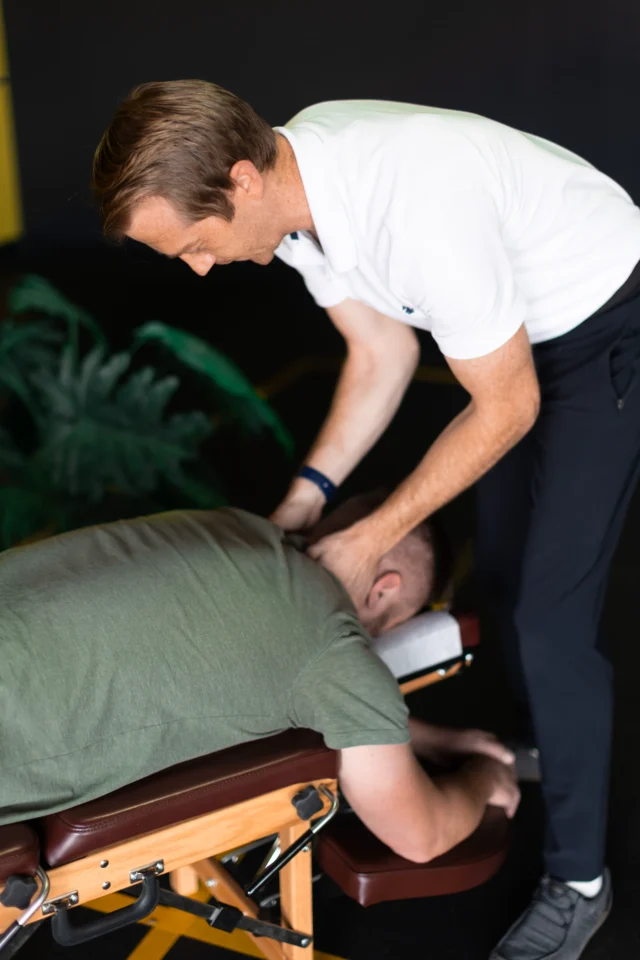
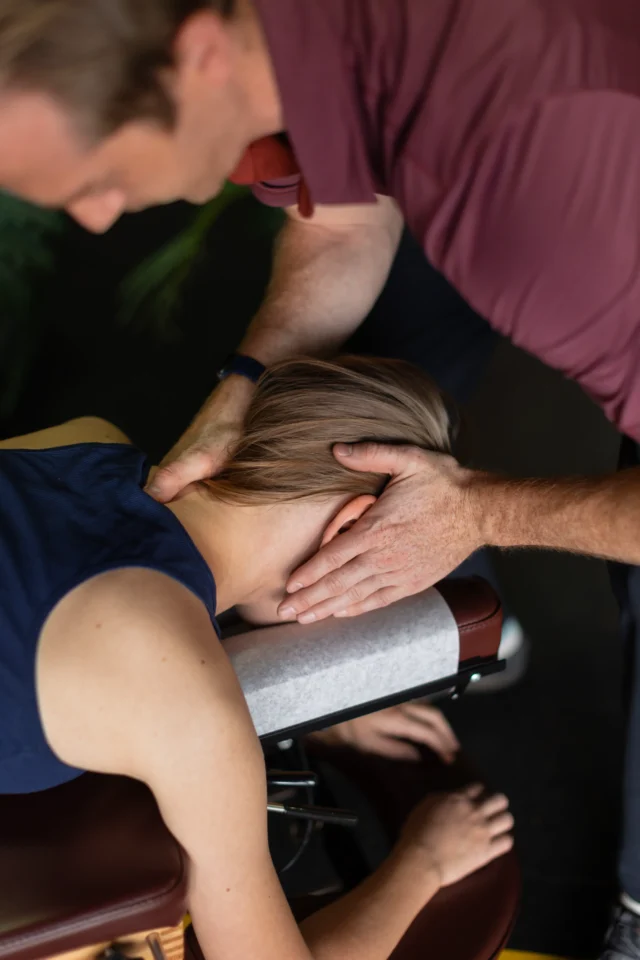
Standard chiropractic adjustments can be helpful, but for complex issues like TMJD, we need to look at the muscular and neurological components. Dr. Hall uses Advanced Muscle Integration Technique (AMIT) and Neural Pathway Integration (NPI) to provide lasting relief.
Advanced Muscle Integration Technique (AMIT)
When you injure a joint or stress a muscle (like the masseter muscle in your jaw from clenching), your body’s natural defense mechanism is to “shut down” that muscle to prevent further damage. Other muscles are then forced to compensate, leading to imbalances, pain, and restricted movement.
With TMJD, specific jaw muscles may be inhibited. AMIT allows Dr. Hall to identify exactly which muscles are shut down. Through precise treatment, he can “reactivate” these muscles, restoring their ability to contract and support the jaw joint properly. This restores balance to the jaw, eliminating the strain that causes clicking, popping, and pain.
Neural Pathway Integration (NPI)
Pain is a signal sent through the nervous system. Sometimes, even after a tissue has healed, the nervous system continues to send “protection” signals, resulting in chronic pain or tightness. NPI is a gentle, non-invasive technique that corrects these neurological inhibitions.
By restoring the proper connections between the brain and the body, NPI helps the nervous system stop guarding the jaw area. This promotes proper function and allows the muscles to relax, significantly reducing the tension associated with TMJD.
Cranial Adjustments
In addition to AMIT and NPI, we also utilize Nasal-Specific Cranial Adjustments. This technique works to reset the cranial bones in the skull. Misaligned cranial bones can exert pressure that negatively affects the nervous system and the jaw. By relieving this pressure, we can improve fluid flow and reduce the structural stress contributing to your TMJD.
Why Choose Holistic Care?
Choosing Straight Up Health & Wellness for your TMJD treatment means choosing a path that avoids long-term medication use and invasive surgery.
The benefits of our approach include:
- Root Cause Resolution: We don’t just mask the pain; we fix the dysfunction causing it.
- Non-Invasive Treatment: Our methods are gentle and do not require drugs or surgery.
- Full-Body Perspective: We check your neck, spine, and posture to ensure your entire structural system supports your jaw health.
- Personalized Plans: Every jaw is different. We tailor our AMIT and NPI protocols to your specific imbalances.
Stop Living with Jaw Pain
TMJD can affect everything from your ability to eat dinner to your quality of sleep. But it is not a condition you have to endure forever. By understanding the difference between the joint (TMJ) and the dysfunction (TMJD), you can seek out the specialized care necessary to fix it.
The team at Straight Up Health & Wellness is ready to help you identify the root of your jaw pain. Through the power of AMIT, NPI, and comprehensive chiropractic care, we can help you get back to smiling, chewing, and living pain-free. Schedule your appointment today!